Venice exhibitions divide into the Biennale at the Giardini and Arsenale, which runs 9 May to 22 November 2026, and year-round museums and palazzi. Decide first whether you want the Biennale or a permanent collection, glass included.
The answer changes with the calendar, the ticket and the day of the week. Check the venice biennale dates before building a trip around it. The wider venice biennale art exhibition guide covers the show itself in more depth. This page sorts the venues by what they suit and links to a detailed guide for each.
Choosing where to start
Three questions decide most itineraries: what time of year you are visiting, whether you want contemporary art or historic collections, and whether glass is the point of the trip. Answer those and the venue list shrinks quickly.
- You are in Venice while the Biennale is open. Treat it as the main event. The 2026 art exhibition is held at the Giardini and the Arsenale, and each venue needs its own visit.
- You want glass above everything else. Begin with the Murano Glass Museum, described by Inexhibit as one of the world’s most important museums dedicated to artistic glass-making. Then add the broader art programme around it.
- You are visiting outside the Biennale months. Build the trip around museums and palazzi with their own programmes, such as the Peggy Guggenheim Collection and the Museo Correr.
- You have limited time. Choose a single venue and do it properly. The Biennale venues alone are large enough to fill a visit, as the pavilion counts below show.
- You are visiting for design or architecture. Check which edition is running. The architecture exhibition belongs to odd-numbered years, so a 2027 trip has a different focus from a 2026 one.
Two practical rules apply whatever you choose. Venues keep fixed weekly closing days, and the Biennale and the Peggy Guggenheim Collection close on different days, so a sensible week alternates between them. Tickets for the Biennale are sold online, so settle the ticket type before you arrive at the gate.
The Biennale in 2026: Giardini and Arsenale
The 2026 art exhibition of the Venice Biennale runs from 9 May to 22 November 2026 at the Giardini and the Arsenale, according to the Venice tourism site. The art exhibition falls in even-numbered years. That makes it the largest single reason to plan an exhibition-led trip to Venice in 2026.
The scale is the first thing to plan around. The same source counts 29 pavilions in the Giardini, 25 in the Arsenale and 46 in the city centre. Visiting all of them in a single trip is unrealistic, so choose by site rather than by checklist. The national presentations are covered in the guide to the venice biennale national pavilions.
Giardini
The pavilion count is the clearest guide to how to use the site. With 29 pavilions, it suits a slow, selective visit more than a sprint. Pick the national presentations you most want to see and treat the rest as discoveries on the way between them.
The Giardini are also the easier venue to reach on foot. The Venice tourism site puts the walk at roughly 25 minutes from Piazza San Marco, which makes it workable as a gentle morning on foot with a vaporetto back.
Arsenale
Inexhibit describes the Arsenale as a medieval dockyard complex and one of the venues of the Venice Biennale. It holds 25 pavilions in 2026, a little fewer than the Giardini, but its long industrial interiors reward a steady walk through rather than a quick look. Because the one-access ticket gives one entry to each venue, it makes sense to give the Arsenale a full session of its own.
The practical difference between the two sites is the approach. The Giardini have their own vaporetto stop, and the Arsenale has another; the lines differ slightly, as the transport section explains.
Pavilions in the city centre
Beyond the two main venues, 46 pavilions sit in the city centre. These suit visitors who prefer to fold exhibitions into wandering. They also pair naturally with a palazzo or museum on the same route. For the architecture edition, which follows a different rhythm, see the venice architecture biennale guide.
Biennale years and the exhibitions in between
The art exhibition falls in even-numbered years and the architecture exhibition in odd-numbered years. The architecture exhibition opens on 8 May 2027 and closes on 21 November 2027, per the Venice tourism site. A visitor in an odd-numbered year should therefore expect a different kind of programme at the same two sites.
Exhibitions in Venice are not limited to the Biennale years. Art Basel’s guide to off-site shows says that some of the most rewarding discoveries take place beyond the borders of the Giardini and the Arsenale, in city palazzi and churches. That is a useful pattern to keep in mind: temporary shows run in historic buildings for a season and then close, so dates matter more than the venue’s name.
A good habit is to treat every listing as having a closing date. For a rolling view of what is on, the page on art exhibitions in venice now is the place to check. For commercial spaces with changing programmes, see contemporary art galleries venice. Evening openings are covered under venice art night.
Glass and design venues
The Murano Glass Museum is the dedicated starting point for artistic glass-making, and Inexhibit ranks it among the world’s most important museums on the subject. Anyone visiting Venice for glass should anchor the trip there. It gives the historical context that makes contemporary glass works easier to read elsewhere.
Contemporary glass is harder to pin to one address. The Biennale’s pavilions and the city’s palazzo venues present broad programmes, and glass can feature as one medium among many. The practical approach is to scan each exhibition’s description for glass as a material before booking a slot. For design-led programmes in a historic house, start with the guide to palazzo fortuny venice.
Seeing glass well
Glass behaves differently from paint and stone on a gallery wall. It transmits and reflects light, so the same piece can change as you move around it. Give glass works longer than a passing glance and look from more than one position.
Planning matters too. Glass shows in historic palazzi tend to be smaller than the Biennale, so they fit alongside another stop. Pair one with a museum on the same day rather than making the trip for a single room. Choose the museum for its own strengths, and keep the glass show as the thread that connects the route.
Museums and palazzi with their own programmes
Outside the Biennale months, the city’s museums carry the exhibition calendar. Each of the following has a dedicated guide, so this section only helps you choose between them.
- Peggy Guggenheim Collection. Inexhibit places it in the Palazzo Venier dei Leoni on the Grand Canal, and it closes on Tuesdays. The peggy guggenheim collection venice guide covers a visit in detail. It suits a day when the Biennale is not an option, since the Biennale venues close on Mondays rather than Tuesdays.
- Gallerie dell’Accademia. Choose the gallerie dell’accademia venice guide if historic painting is the priority rather than contemporary shows.
- Museo Correr. The museo correr venice guide fits visitors already in Piazza San Marco who want an exhibition stop close at hand.
- Fondazione Prada. The fondazione prada venice guide covers its programme at Ca’ Corner della Regina, a good match for contemporary art visitors.
- Querini Stampalia. The querini stampalia venice guide suits those who prefer a smaller foundation to a large museum.
If you plan several museum visits, compare combined tickets before paying at each door. The venice museum pass guide explains how the options work and when a combined ticket is worth having.
Tickets, prices and opening hours
Biennale tickets are sold online. The Venice tourism site lists a one-access ticket covering one entry to each venue at 30 EUR, with a lower rate for students and under-26s. The venice biennale tickets guide walks through booking step by step.
| Ticket | Price | Planning use |
|---|---|---|
| One-access, full price | 30 EUR | One entry to each venue; the default for a focused visit. |
| One-access, students and under-26s | 16 EUR | Carry proof of eligibility. |
| One-access, reduced | 20 EUR | For over-65s and Venice residents. |
| Multiple-access, three consecutive days | 40 EUR | Suits visitors who want to split the sites across days. |
| Combined art and performance | 40 EUR | One art entry plus one performance. |
| Scheduled guided tour | 10 EUR per person per venue | Admission is not included. |
These prices come from the Venice tourism site’s Biennale page.
Opening hours
Both venues open 11:00 to 19:00, with last admission at 18:45, from 9 May to 27 September. From 29 September to 22 November the day shifts earlier and shortens to 10:00 to 18:00, with last admission at 17:45. The venues close on Mondays.
The decision from this is simple. In autumn, start earlier because the day ends sooner, and do not plan an arrival close to the last-admission time. Check the guide to venice biennale dates again before travelling in case anything changes.
Choosing the right ticket
- A single focused visit. The one-access ticket is enough, since it covers an entry to each venue.
- Two sites at an unhurried pace. A three-consecutive-day multiple-access ticket gives room to split the venues across days without rushing.
- Performance interest. The combined ticket pairs one art entry with one performance.
- Guided visits. Scheduled tours that you join cost 10 EUR a person per venue and are on top of admission.
Getting to the Biennale venues by vaporetto
The vaporetto is the simplest route to both Biennale venues, and the Venice tourism site gives the lines. For the Giardini, take ACTV line 1, 4.1 or 5.1 to GIARDINI BIENNALE. For the Arsenale, take line 1 or 4.1 to ARSENALE. Line 5.1 serves the Giardini stop but is not listed for the Arsenale, so use line 1 or 4.1 if the Arsenale is your destination.
Arriving from Punta Sabbioni, line 14 goes to San Zaccaria, where you change to line 1, 4.1 or 5.1. That change point is the main thing to remember for visitors coming by that route.
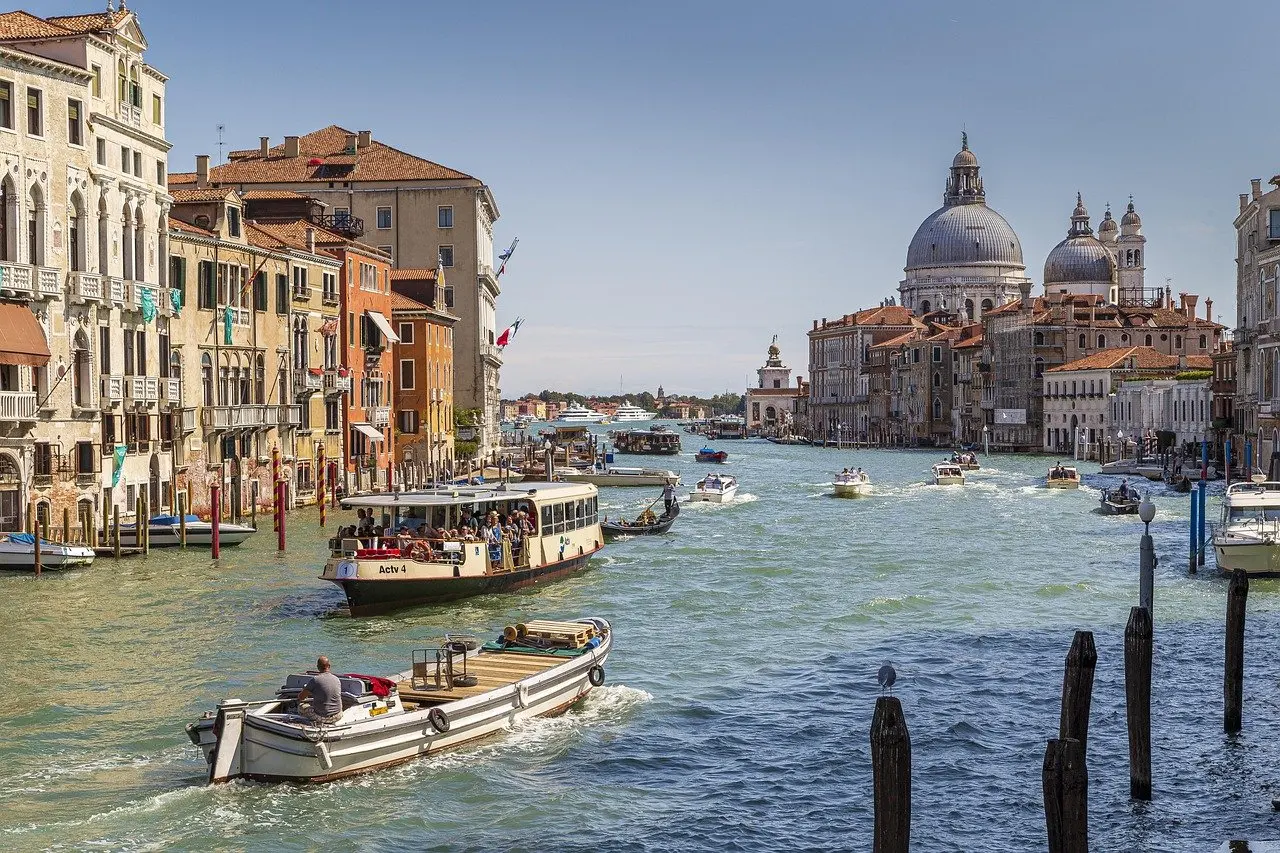
Walking is a real alternative for the Giardini. The same source puts it at roughly 25 minutes on foot from Piazza San Marco, so a short vaporetto hop is a choice rather than a necessity. The Rete Unica 75-minute ticket costs 9.50 EUR and excludes routes 16 and 19, so do not plan a journey on those routes with it.
The sensible pattern is to ride the vaporetto out and walk part of the way back, or the reverse. Either way, the stops named in the lines above are the ones to look for on the timetable board.
Planning a day around an exhibition
Match the plan to the calendar and the closing days. The venues close on Mondays, so use that day for a museum that is open instead. The Peggy Guggenheim Collection closes on Tuesdays, which makes Tuesday a Biennale day.
- Biennale days. Keep the Giardini and the Arsenale on separate sessions, and add a city-centre pavilion if you pass one.
- Museum days. Pair a larger museum with a smaller palazzo show, and compare combined tickets first.
- Glass days. Start with the Murano Glass Museum, then look for glass in broader programmes.
- Evening plans. Check the listings for special openings before assuming everything shuts at the usual closing time.
Whatever the plan, treat every date and price here as a reference to confirm with the venue’s own channel before booking.
Frequently asked questions
What art exhibitions are on in Venice now?
The Biennale art exhibition runs from 9 May to 22 November 2026 at the Giardini and the Arsenale. Smaller shows in palazzi and museums have their own dates.
Which Venice venues host glass art exhibitions?
The Murano Glass Museum is the dedicated glass venue. Other glass works appear within broader art programmes, so check each exhibition’s description.
How much do Venice exhibition tickets cost?
Biennale one-access tickets cost 30 EUR, or 16 EUR for students and under-26s.
How do you get to the Biennale venues?
Use ACTV line 1, 4.1 or 5.1 for the Giardini, and line 1 or 4.1 for the Arsenale. From Piazza San Marco the Giardini are about a 25-minute walk.
Are there exhibitions in Venice outside the Biennale years?
Yes. Architecture exhibitions fall in odd-numbered years, and temporary shows run in palazzi and churches, such as a 2024 exhibition at the Chiesa di San Samuele near Palazzo Grassi.