| Item | Detail | Planning use |
|---|---|---|
| Current architecture edition | 19th International Architecture Exhibition, 2025, curated by Carlo Ratti, titled Intelligens. Natural. Artificial. Collective. | Confirms you are planning for the architecture programme rather than the art one. |
| Alternate-year partner | Art Biennale, 132nd edition, 9 May to 22 November 2026 | Check the year before booking, because the two exhibitions take turns. |
| Scale | Over 750 participants in the 2025 exhibition | Expect a dense programme, not a quick walk-through. |
| Giardini | Approximately thirty permanent national pavilions, plus the Central Pavilion | Best for national displays and the main curated show in one park. |
| Arsenale | Former shipyard; Corderie dell’Arsenale hosts highlights of the 2025 edition | A separate venue that needs its own time block. |
Edition details come from La Biennale di Venezia’s introduction by Carlo Ratti, while venue and timing details come from the Dolcevia Biennale visitor guide.
The Venice Architecture Biennale is the architecture edition of La Biennale di Venezia, staged in alternate years with the Art Biennale. Split your visit between the Giardini and the Arsenale, and book time generously.
For the wider calendar of shows in the city, see venice exhibitions. The sections below follow a visit in order: how the schedule works, what to do before you go, then each main venue.
How the alternating schedule works
The Biennale alternates between architecture and art. In practice, a year with an art edition is not the year to look for architecture, and the reverse also holds.

Older architecture editions show the same seasonal shape. The Conversation reported that the 14th International Architecture Exhibition, curated by Rem Koolhaas, ran until 23 November. Late-autumn closings are therefore normal for both editions, which makes the final weeks a realistic window for those who prefer to travel after the summer peak.
What sets the architecture edition apart
Each architecture edition is led by a single curator who sets a theme for the whole exhibition. Participating countries then respond to it. For the 14th edition, Koolhaas invited 65 countries to respond to a question about absorbing modernity. A national display in an architecture year is therefore usually a response to a curatorial brief, not a free-standing art show.
Before the visit: planning window
Settle four practical points before travelling, and do them in this order.
- Confirm the edition and its dates. Opening and closing dates are published by the organiser on the La Biennale di Venezia architecture pages. Use them to pick a week, not a news article from a previous edition.
- Decide how to buy entry. The ticket options, and what each one covers, are laid out in the guide to venice biennale tickets.
- Choose a venue priority. If time is short, choose the Giardini for national pavilions or the Arsenale for the curated exhibition, rather than rushing both.
- Check access needs early. The Dolcevia guide notes that not all spaces in the Giardini are fully accessible, so contact the organiser in advance if step-free routes matter.
The 2025 edition: Intelligens. Natural. Artificial. Collective.
Carlo Ratti curated the 19th International Architecture Exhibition, and the official introduction names the title as Intelligens. Natural. Artificial. Collective. The exhibition features over 750 participants, a figure the organiser describes as a first. Its curator’s introduction also mentions an open call for projects that ran from 7 May to 21 June 2024, so the programme was not drawn only from invited names.
Visitors move through three thematic worlds: Natural, Artificial and Collective Intelligence. For planning, this means the curated exhibition is arranged as a route with a conceptual order. Walking it from the start gives a clearer reading than dipping in at random.
Themes to expect
The edition also carries a Circular Economy Manifesto, which sets bold goals for reducing waste and promoting material reuse. Expect displays to engage with materials, reuse and technology, not only finished buildings. Visitors who want to see architecture as photographs of landmarks may find the content more research-driven than they expected.
At the Giardini: national pavilions and the Central Pavilion
The Giardini holds approximately thirty permanent national pavilions, and the Central Pavilion is the largest structure in the gardens and houses the main curated exhibition, as the Dolcevia guide describes. The park suits visitors who want to compare how different countries answer the same curatorial theme. For a country-by-country breakdown, see the guide to the venice biennale national pavilions.
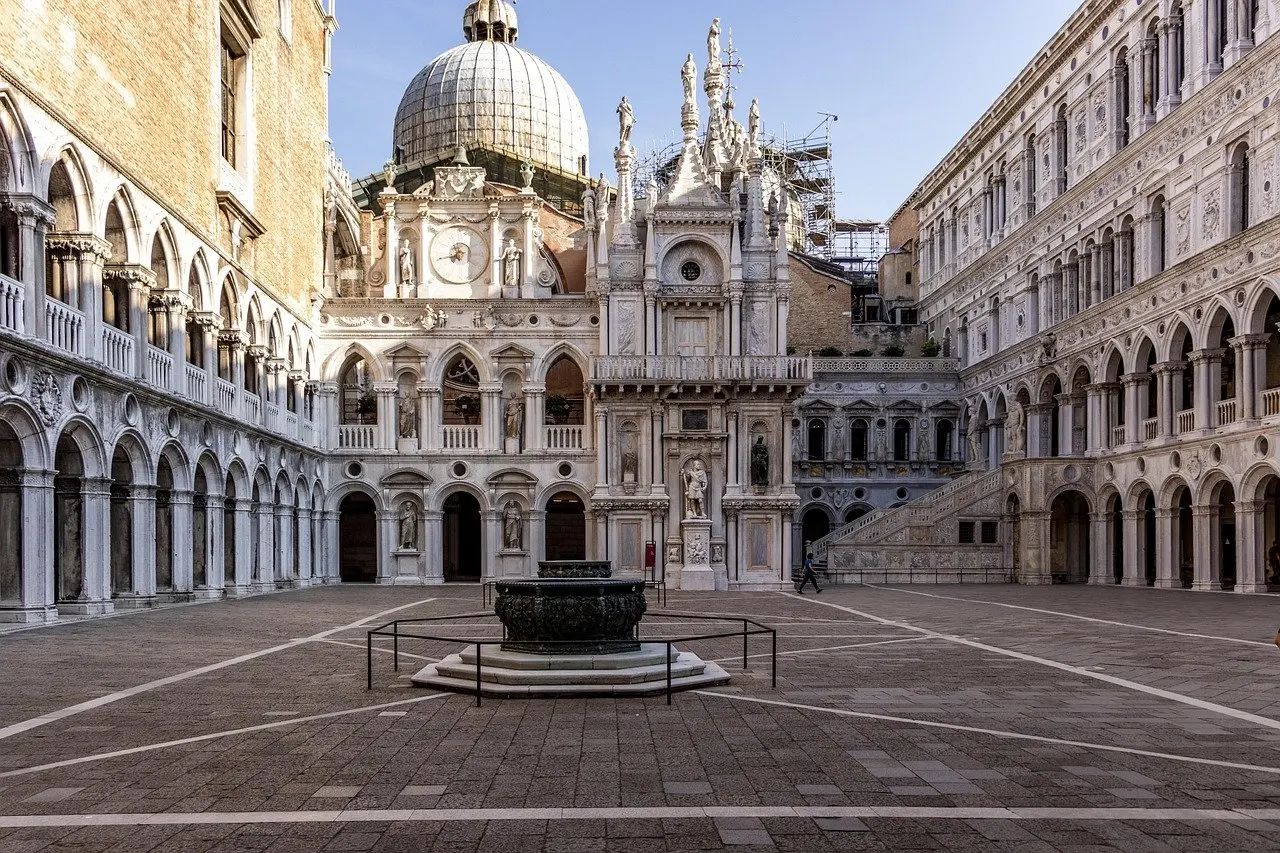
The same guide advises four to six hours at minimum for a thorough visit. Treat that as a floor, not a target. Visitors who read wall texts, watch films and stop for a break will use more of the day.

Walking the park
- Start with the Central Pavilion. It carries the main curated exhibition, so it frames the theme before you see the national responses.
- Group pavilions by position. Moving along the paths in one direction avoids doubling back and saves energy for the later buildings.
- Plan for gaps in access. Because not every space is fully accessible, check the route for each building you most want to see.
At the Arsenale: the Corderie and beyond
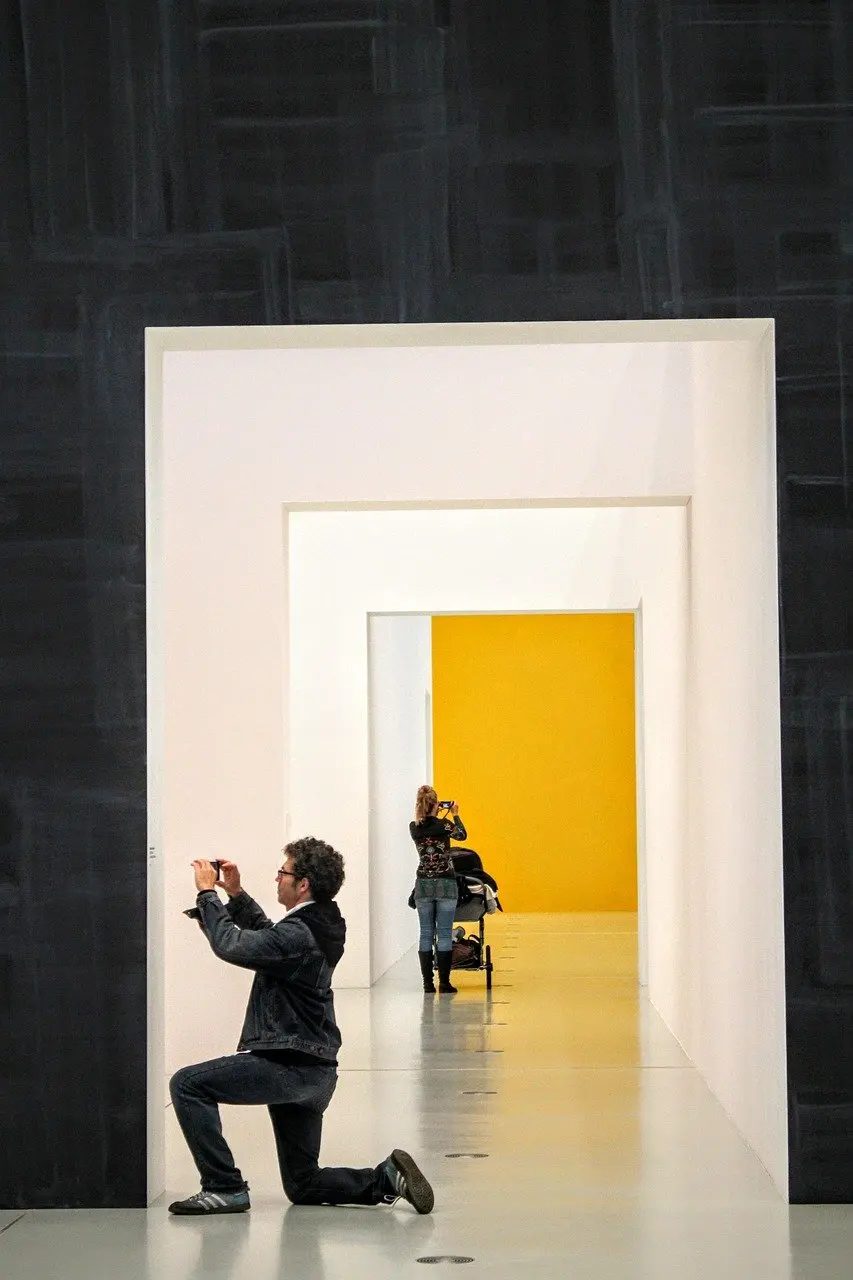
The Arsenale is a former shipyard and a separate venue from the Giardini, and it hosts a continuation of the main exhibition, according to the Dolcevia guide. For the 2025 edition, the organiser highlights the Corderie dell’Arsenale on its edition page.
The Arsenale suits the visitor who wants the curator’s argument at the largest scale. The Giardini suits comparison across countries. If the aim is to understand the architecture edition specifically, rather than to collect pavilions, the Arsenale is the stronger first choice.
Allowing the right amount of time
Allow at least four to six hours for the Giardini alone, and do not squeeze the Arsenale into the same afternoon. Visitors with only a short window should pick one venue and see it properly, not sample both. A visit that includes both sites works better as separate outings, with a rest in between.
Troubleshooting common problems
- Arriving in an art year. The Art Biennale runs in 2026, so architecture content will not be the focus. Check the edition year on the organiser’s site first.
- Running short of time. Choose the Giardini for national comparison or the Corderie for the curated exhibition, then return for the other venue if the ticket and schedule allow.
- Access difficulties. Contact the organiser before travelling if a particular pavilion or route needs to be step-free.
- Ticket confusion. Compare the options in the venice biennale tickets guide before choosing a day.
Frequently asked questions
When is the Venice Architecture Biennale held?
It takes place in alternate years with the Art Biennale. The 19th architecture edition was in 2025, and the Art Biennale follows in 2026.
How does it differ from the Art Biennale?
The architecture edition is a curated International Architecture Exhibition, with Carlo Ratti as curator in 2025. The Art Biennale is a separate exhibition, the 132nd edition in 2026, founded in 1895.
Which venues host the Architecture Biennale?
The main sites are the Giardini, with its national pavilions and Central Pavilion, and the Arsenale, including the Corderie dell’Arsenale.
How much time should I allow?
Plan for four to six hours at minimum for a thorough visit to the Giardini. Treat the Arsenale as a separate visit.