Murano glass factories are easiest to visit by walking the free Rio dei Vetrai quayside and asking at each entrance about a demonstration. Visitors wanting a stated price and a set departure should book a tour.
This guide sits within the wider murano glass art overview. It does not rank furnaces by quality. The options below run from free to paid, in order of commitment, so you can match the visit to your budget, your timetable and whether you plan to buy.
How to choose a furnace visit
No single factory is the best glass factory in Murano for every visitor. The right choice depends on four criteria: what you are willing to pay, how much time you have, whether you need a guaranteed demonstration, and whether you plan to buy finished pieces.
- Flexible and free: the public quayside costs nothing to walk, but whether you get inside a furnace or see a demonstration is up to each venue. This suits people who enjoy wandering and are happy to try several entrances.
- Guaranteed demonstration: a guided tour that includes a glassblowing demonstration removes the guesswork, because the price is stated and the demonstration is part of the package. The tour listings give a starting price, so check what is included before booking.
- Buying finished pieces: factory showrooms display and sell the finished objects, so a showroom visit matters more than a demonstration for anyone shopping.
- Understanding the craft: a demonstration shows how a maestro vetraio shapes the glass, which makes later purchases easier to judge.
If you have only one afternoon and want to watch glass being worked, a booked demonstration is the more reliable choice. If you have time and mainly want to browse, the quayside and showrooms give you more freedom, though with less certainty about what you will see.
Visit options, from free to booked
1. The Rio dei Vetrai quayside
The Fondamenta dei Vetrai runs along a canal of about 500 metres in the heart of Murano, and furnaces have clustered along its quaysides for centuries. The place name goes back to the 1291 decree by which the doge ordered the furnaces moved from Venice to Murano, so the quayside is the historic core of the island’s glassmaking rather than a modern visitor strip.
The quayside is public and free, and it can be walked at any time. Furnace and workshop hours vary, and furnace visits are at each venue’s discretion. Many glassworks here offer blowing demonstrations, so ask at the entrance rather than assuming one is running. Early morning is the suggested time to walk, with clear reflections on the water.
A practical approach is to walk the length of the canal once, note the venues that display work or post a demonstration sign, and then return to the ones that interest you. Because hours differ between venues, a short walk first gives you the information you need to plan the rest of the day.
This option suits flexible visitors who want to compare several glassworks before committing. The limit is that nothing is guaranteed: a demonstration depends on the venue and the hour, and a walk-in visit can end without the demonstration you hoped to see.
2. Barovier&Toso’s palazzo on the canal
One named address on the canal is the Palazzo Barovier&Toso Museum, a 1920 palazzo on the Rio dei Vetrai where the maker stages its chandeliers. The building is a fixed point on the quayside, which makes it easy to find if you are navigating the canal on foot.
It suits visitors who want to see chandeliers displayed in a palazzo setting rather than watch glass being blown. Confirm opening hours on the day, since workshop and furnace hours vary along the quayside and the palazzo is one venue among several with its own timetable.
3. Half-day tour with a demonstration
A booked half-day tour combines Murano and Burano and includes a glassblowing demonstration.
This suits first-time visitors who want a demonstration without negotiating entrances or timing their own walk around venue hours. The trade-off is time: the schedule is shared with a second island, so Murano is not the whole outing, and you will have less unstructured time to browse than on a self-guided walk.
4. Full-day tour with a demonstration
The operator also lists a longer option, a tour of Murano, Burano and Torcello with a glassblowing demonstration.
The full-day version suits visitors who want to see three islands in one outing and are comfortable with a fixed timetable. Anyone who wants unhurried time among the furnaces will find the half-day tour or the self-guided quayside walk leaves more room to stop, look and ask questions at each venue.
5. Factory showrooms
After glass leaves the furnace and is finished, the objects are displayed in factory showrooms, where visitors can view and purchase. A showroom is the logical end of a furnace visit for anyone planning to buy, because you can compare the finished pieces you have just seen being formed.
It is also where origin questions matter most, as covered below. Showroom prices depend on the piece, so compare objects by what you can see and confirm where each one was made before deciding.
Comparing the options
| Option | Cost | Time and hours | Demonstration access | Planning use |
|---|---|---|---|---|
| Rio dei Vetrai quayside | Free to walk | Walkable any time; furnace and workshop hours vary | Many glassworks offer one; ask at the entrance | Flexible visitors comparing several venues who accept no guarantee |
| Barovier&Toso palazzo | Check on site | Confirm hours on the day | Not a demonstration; chandeliers on display | Visitors who want to see staged chandeliers in a palazzo |
| Half-day tour (Murano and Burano) | From €25 | About 4.5 h | Glassblowing demonstration included | First-time visitors who want a demonstration without managing entrances |
| Full-day tour (Murano, Burano and Torcello) | From €30 | About 6 h, daily at 11:00 | Glassblowing demonstration included | Visitors with a full day who want three islands |
| Factory showrooms | Depends on the piece | Usually part of a furnace visit | None; finished objects on display and for sale | Buyers comparing finished pieces |
Quayside details come from a Murano furnaces guide, and tour prices and durations from a tour operator’s page. Both are secondary listings, so confirm current prices and hours before you travel.
What a demonstration shows
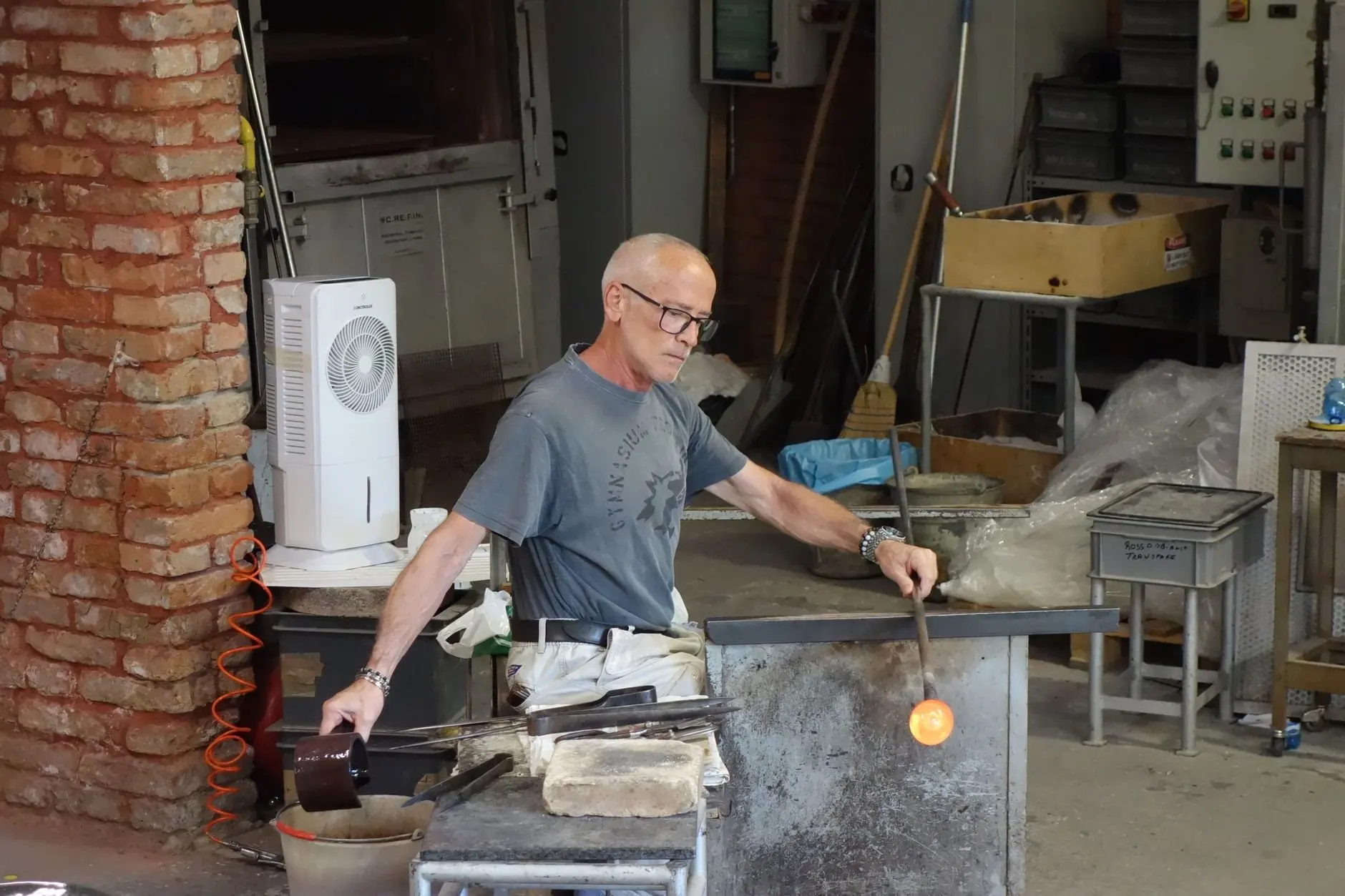
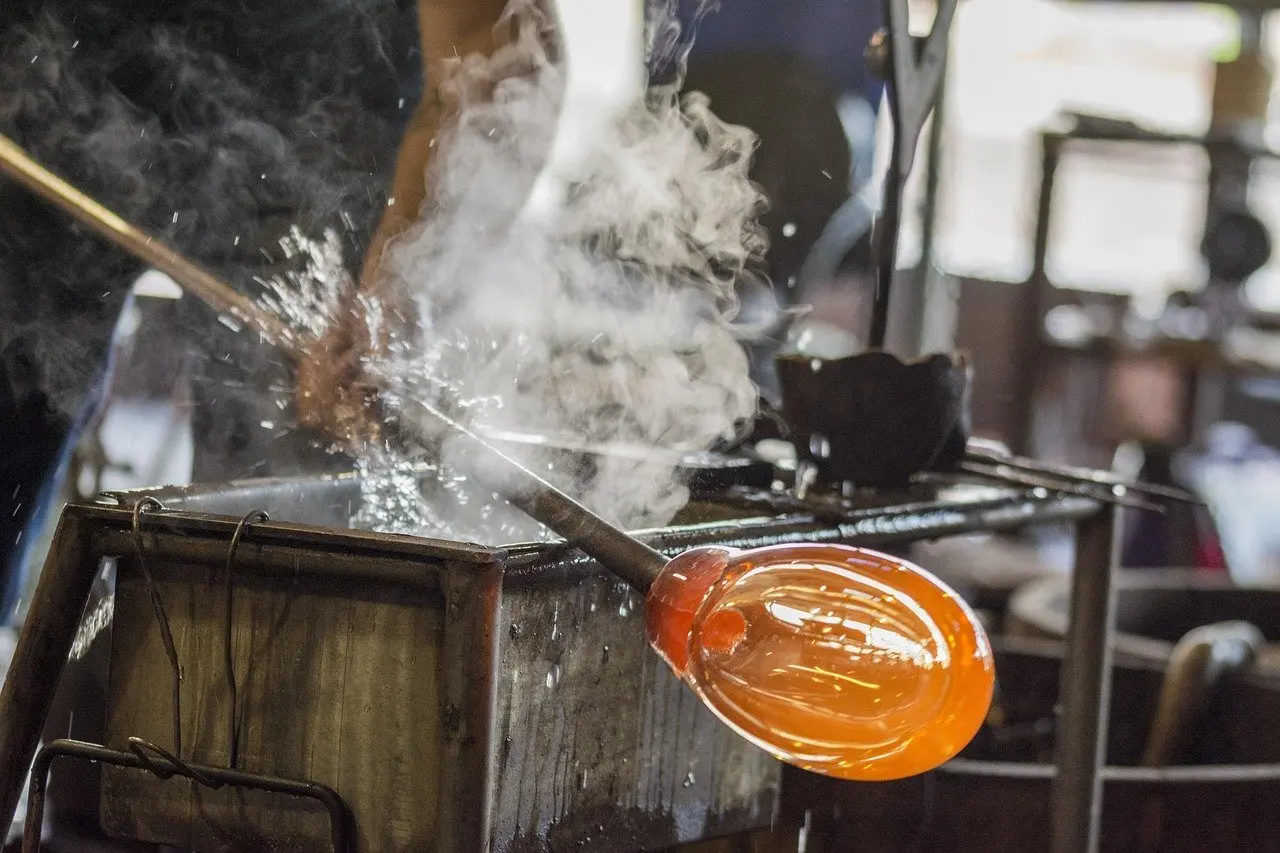
A demonstration shows a maestro vetraio, the master glassmaker, shaping glass while it is soft. The furnace behind that work melts raw materials, primarily silica sand, soda and lime, at temperatures exceeding 1,400°C. The maestro is described as a figure of both artistic and technical authority, which is why the demonstration is worth watching closely rather than as a brief photo stop.

Shaping is only part of the process. The annealing stage afterwards can take hours or even days, depending on the size of the piece. A piece you see being formed during a demonstration may therefore still need time before it is finished, so the object you watch is not the one you carry home that afternoon.

Murano’s glassmakers developed techniques that remain exclusive to the island, including millefiori, cristallo and aventurine. For the first of these, see what is millefiori glass. For historic pieces and context beyond the furnaces, the murano glass museum complements a furnace visit, especially if you want to compare older work with what you see being made today.
Spotting genuine Murano production
Murano’s glassmaking tradition is described as more than 1000 years old, and the Murano name carries weight in shops across Venice. That reputation is also why imitations are common. Many glass items sold elsewhere in Venice and abroad are imitations, so a genuine factory visit is a way to see where authentic pieces come from.
- Check the origin rule: only glass design objects made in Murano can be marketed as original Murano glass. Ask where a piece was made, and treat a shop name or a Venetian address as no evidence of origin on its own.
- Ask about the trademark: the Vetro Artistico Murano trademark is the label to raise when asking a seller to back an origin claim. A seller who can explain the label is giving you something you can check.
- Treat seller certificates as seller claims: one retailer says it provides a Murano Glass Authenticity NFT Certificate with each purchase. That is the seller’s own statement, not an independent check, so it should not replace questions about where the piece was made.
- Prefer production you can see: a furnace or workshop on the premises, such as those along the quayside, gives a visible link between the glass and the place. If a seller cannot say where a piece was made, treat that as a reason to wait rather than buy on the spot.
Frequently asked questions
Which Murano furnaces can you visit?
Furnaces cluster along the Rio dei Vetrai, and visits are at each venue’s discretion. Walk the quayside, ask at each entrance, and confirm whether a visit or demonstration is possible that day.
Are glassblowing demonstrations free?
The public quayside is free to walk. Walk-in demonstrations depend on each glassworks, so ask at the entrance whether one is running and whether it carries a charge. Booked tours that include a demonstration are priced separately.
How much does a demonstration cost?
Tours that include a glassblowing demonstration are listed from €25 for a half-day and from €30 for a full day. These are starting prices, and walk-in charges are set by each venue.
How can you tell a genuine Murano factory?
Look for production on site and ask the seller where the piece was made. Ask about the Vetro Artistico Murano trademark, and do not rely on a shop’s name or a certificate alone.