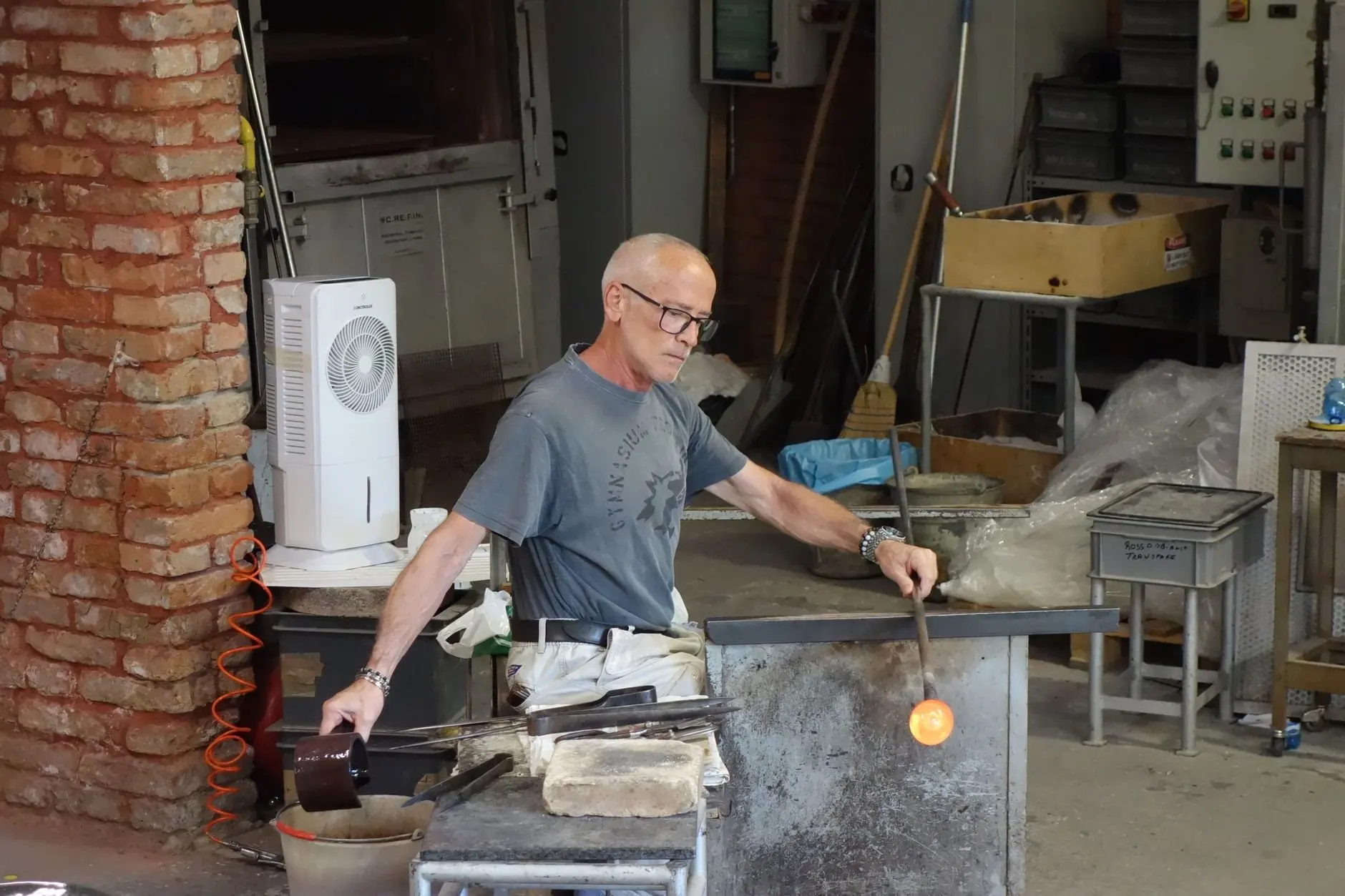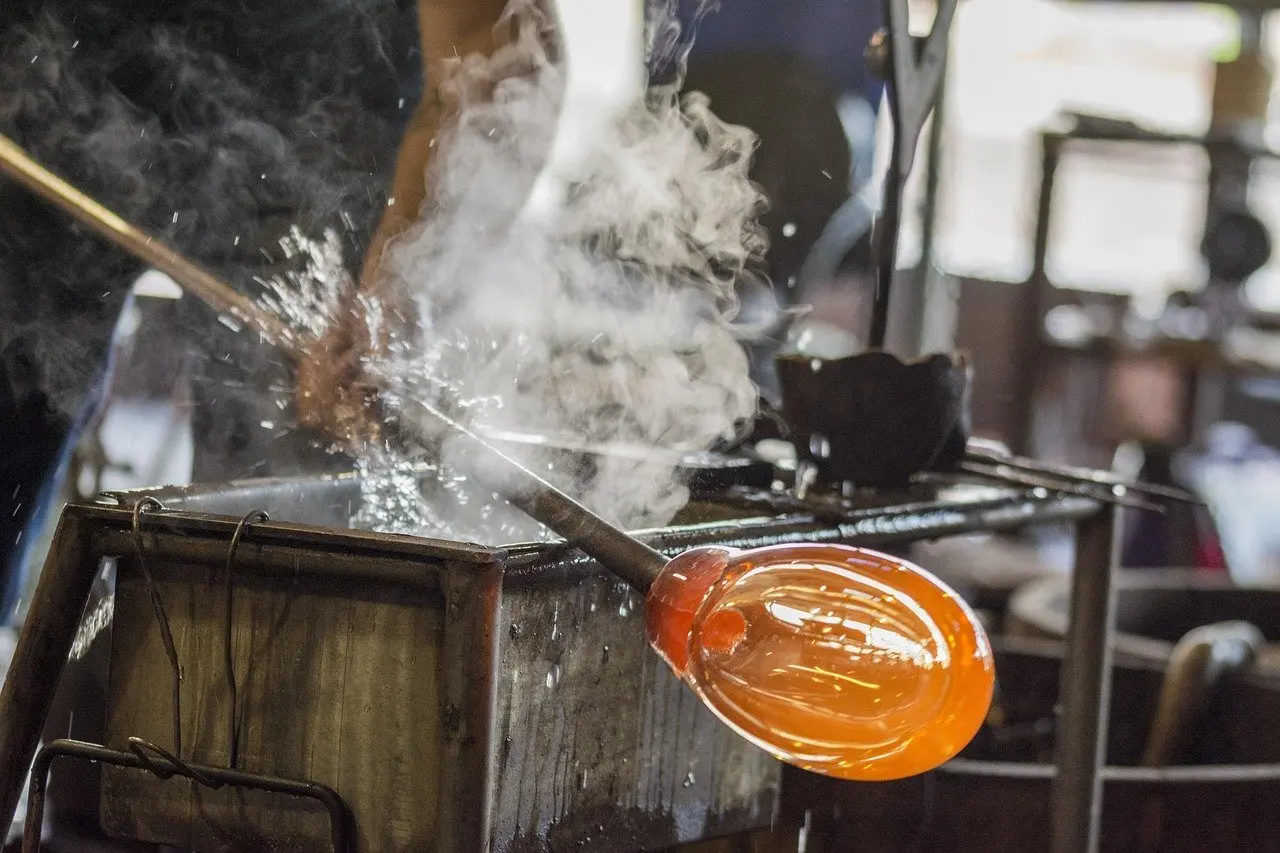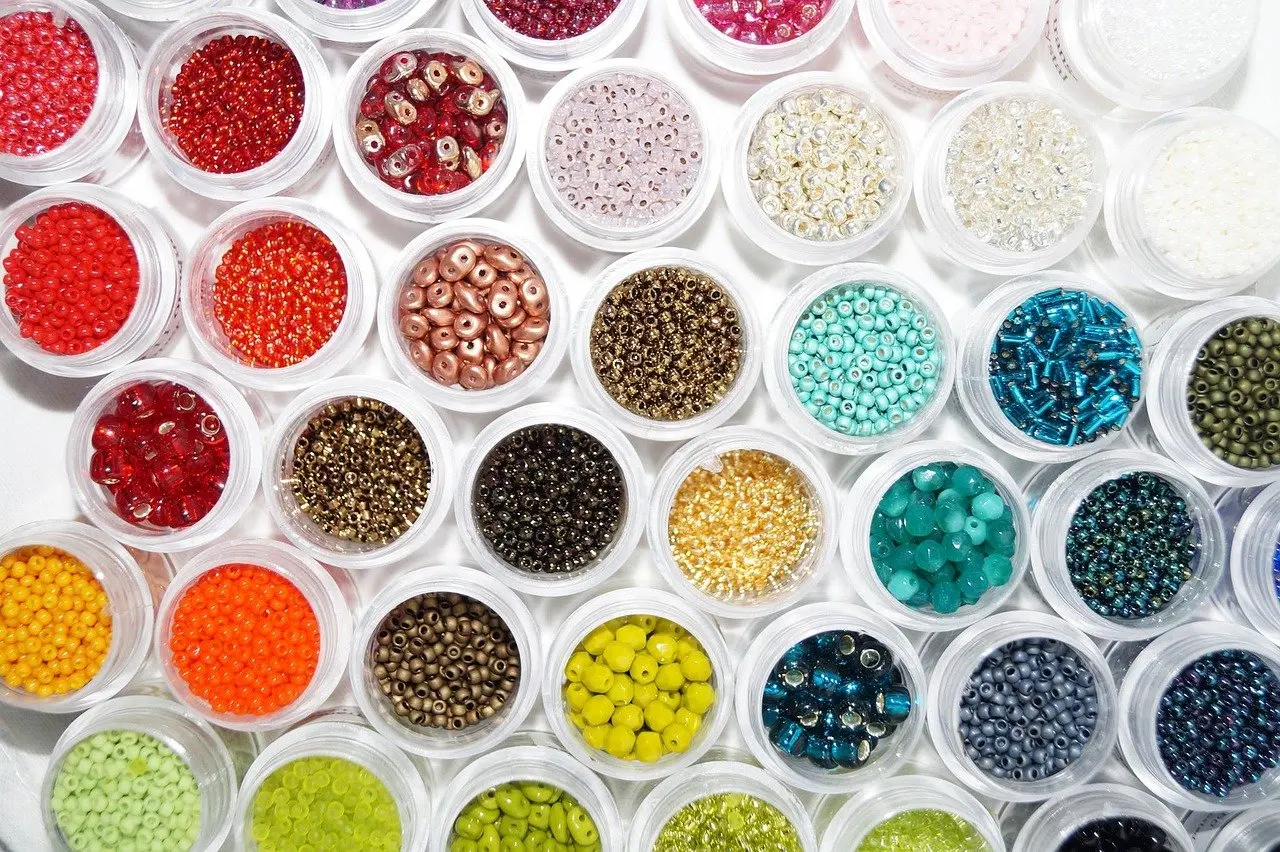
Murano lampwork beads start as a small rough glass globule, gain layers of colored glass on a steel pole, take their shape in a mould made from murrine canes, are cut to size and are strengthened in a furnace.
That sequence is the backbone of the wider craft covered in murano glass art. It also explains why one bead can be called lampwork, millefiori or murrine without contradiction.
The bead-making sequence from globule to furnace
Murano beads are made in stages, and each stage uses one simple tool or material. A maker’s account of the millefiori process describes the order below. Millefiori beads are made from glasses of different colors, so the order of the stages matters more than any single step.
- Form the globule. The artisan first makes a small, rough glass globule. Everything else is built on this core, so its size sets the scale of the finished bead.
- Dip and layer. The globule is dipped into colored glass on a steel pole. Repeated dipping builds up layers, and the colors of those layers decide how the bead looks once it is cut.
- Shape in the mould. The layered sphere goes into a special mould made from millefiori glass canes, also called murrine canes. The mould is where the cane pattern meets the bead.
- Cut the rod. The resulting rod is cut into the desired size, and each piece becomes a millefiori bead.
- Fire in the furnace. The product is placed in a special furnace with the temperature set, which strengthens the glass.
The tools here are few: a steel pole, a mould, a cutting step and a temperature-controlled furnace. The account gives no temperature figure, so no single number should be treated as the temperature for Murano beads. The furnace stage is best read as a strengthening step that follows shaping, not as the stage that creates the pattern.

Murrine canes and what they add to a bead
Murrine canes are the patterned glass rods that give millefiori beads their decoration. The same maker’s account says the canes originate from Italy and have a plain exterior. The pattern is only visible inside, so a cane is judged by what its cut surface shows, not by its outside.
| Cane attribute | Detail | Planning use |
|---|---|---|
| Exterior | Plain | Do not judge a cane by its outside. The decoration appears only when it is cut. |
| Interior patterns | Floral, star, heart and geometric | Use these four families as a vocabulary when comparing beads or asking a seller what a pattern is. |
| Origin | Italy | Italian origin is part of why murrine beads are described in Venetian terms. |
| Role in making | Mould made from the canes | The canes shape the layered sphere, so murrine are part of the process, not only a surface decoration. |
These attributes come from the millefiori process account cited above.
A murrine bead, then, is a bead whose decoration comes from cane patterns. Which pattern appears depends on the cane: floral, star, heart or geometric. A buyer who wants a flower motif should ask for a floral cane. A buyer who wants a repeated geometric look should name that pattern family.

Keeping lampwork, millefiori and murrine terms apart
The three words describe different things, and mixing them is the main source of confusion when comparing Murano beads. They answer different questions.
- Lampwork points to how a bead is made by hand: a glass core built up on a steel pole with colored glass.
- Millefiori names the multicolor character of the glass. The beads are made from glasses of different colors, and their shapes are formed from cane patterns.
- Murrine names the canes themselves, the patterned rods that make the mould and the pattern.
One bead can therefore carry all three labels. A hand-layered bead on a pole is lampwork, its multicolor glass is millefiori, and its patterns come from murrine canes. A seller who uses only one of these words is not necessarily wrong. The word simply answers only one question.
For the broader family of methods behind these labels, murano glass techniques sets bead work beside blowing and other forms. For the glass itself, what is millefiori glass explains the cane tradition in more depth.
The Italian origin of the canes is the thread that ties these terms to Venice. The vocabulary used in shops, museums and catalogues keeps returning to Venetian names for that reason.
Choosing beads: categories, strands and patterns
Beads are usually sold by category before they are sold by technique, so the category name is the practical starting point. One Venetian bead retailer lists Millefiori, Mosaics and Pastel “Lace” among its loose bead categories. Millefiori is therefore a recognised shopping label of its own, alongside other decorative styles.
When comparing beads, three questions narrow the choice quickly:
- Is the pattern cane-based? If the decoration is floral, star, heart or geometric and repeats cleanly, it points to murrine canes. A plain colored bead points to layered color without cane decoration.
- Is it loose or strung? Loose beads suit a buyer who wants to choose individual patterns. Strands suit a buyer who wants a uniform look. The category name on the listing usually says which one is on offer.
- Is the description specific? A listing that names the pattern family and the category gives more to work with than a general “Murano glass” label.
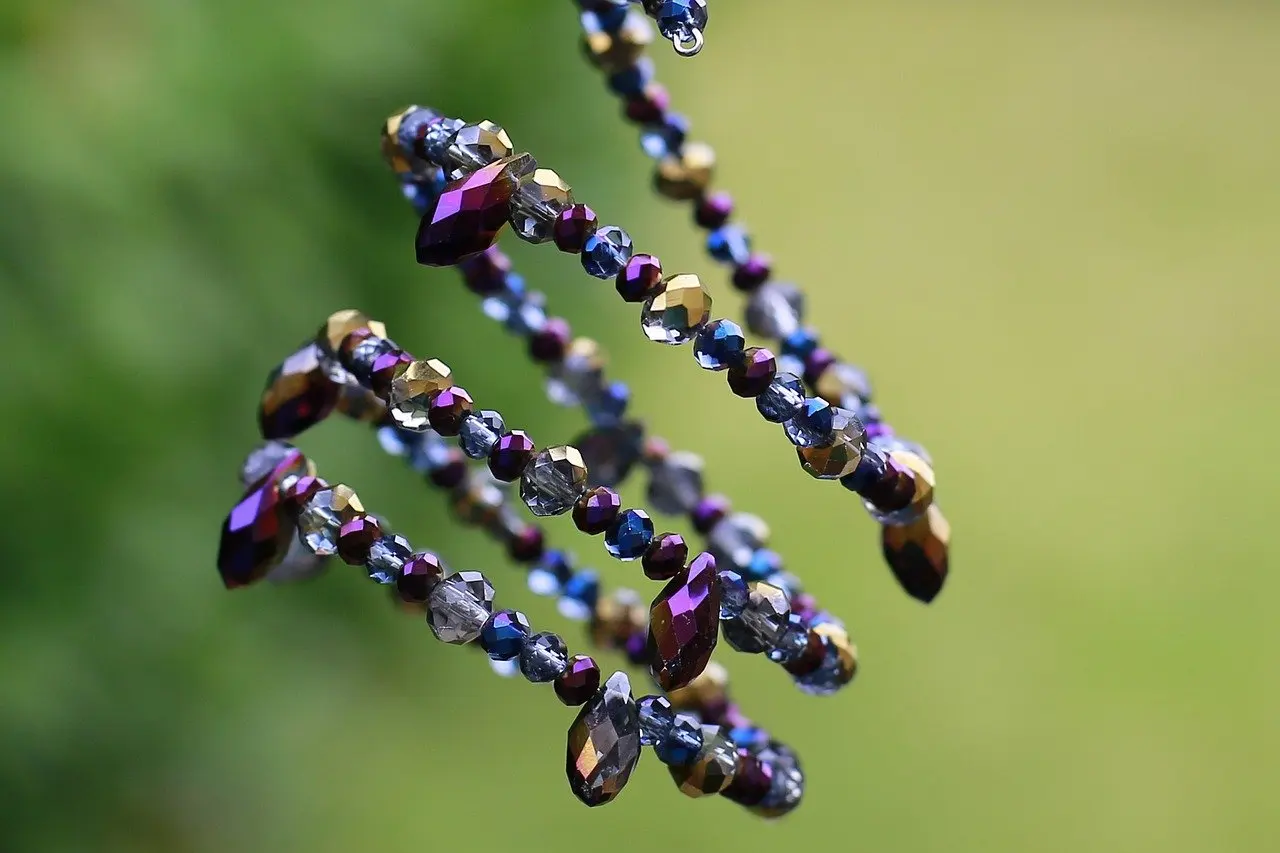
Where a pattern matters more than a technique name, start from the pattern family. Where authenticity matters, ask the seller to describe the stages above: the pole, the layering, the cane mould and the furnace. A seller who can walk through them is describing a process, not just repeating a label.
Frequently asked questions
Are millefiori beads and murrine beads the same thing?
They overlap closely. The maker’s account describes the mould as made from Millefiori glass canes, also called murrine canes, so both words point to the same patterned rods.
Why are beads fired in a furnace at the end?
The furnace step uses a set temperature to strengthen the glass after the bead has been shaped and cut.
What patterns can appear inside a murrine cane?
Floral, star, heart and geometric patterns. The exterior of the cane stays plain, so the pattern shows only when the cane is cut.
How can a buyer tell millefiori from other bead styles?
Check the seller’s category. Millefiori appears as its own loose-bead category beside Mosaics and Pastel “Lace” at one Venetian bead retailer.